Showing posts with label treasure hunters. Show all posts

Tuesday, September 23, 2025

Now Seek My Bones - S. H. Courtier

THE STORY:  A monster crocodile. A private zoo of venomous snakes. An 18th century ship that disappeared. A lost treasure. And the return of an ancient cult of Crocodile Men. Sounds less like a mystery novel and more like a lost screenplay for another Indiana Jones sequel (though Indy definitely would not be happy about the snakes). These are the bizarre elements that feature in the plot of Now Seek My Bones (1957) which is more of an adventure thriller than it is a detective novel. This macabre crime novel ventures into horror territory frequently when an Australian obsessed with his ancestors from Revolutionary era France is found dead in his swimming pool that borders a marshland and draws water from its natural source. He was apparently attacked and killed by a giant crocodile that got through a sabotaged mesh fence designed to prevent entry of fish and other aquatic life. The horrible death is called a grisly accident and dismissed. When the novel opens the family is preparing for the man's funeral. "Digger" Haig, one of Courtier's clever often arrogant series policeman characters, suspects murder and makes his way surreptitiously to the McGorrie ranch to get to the bottom of the skulduggery.

THE CHARACTERS: The ostensible protagonist and something of an aide to Haig is Jeff Galloway, affectionately known as Galley by most of the women in the story. A reporter and friend of the slain Rann McGorrie, Galley is disturbed because he learned of Rann McGorrie's death from an obituary. No one from the family informed him of the death and so he heads to Port Crosby to attend the funeral. When he arrives we meet the members of the small funeral party, mostly relatives of McGorrie.

Kit McGorrie - Rann's daughter who at first seems to be a naive and flighty young girl. But no one is truly what they appear to be in this novel.

Aunt Hilary - Rann's sister, the imperious substitute matriarch of the clan. She insists that her brother died in a bizarre accident. That there is no killer at large...until the ranch is invaded by the strange men wearing crocodile masks who have modeled themselves after a cult of dream-timing indigenous people of decades past.

Norman McGorrie - Rann's nephew. From the outset it seems Norman is nothing but bad news and many readers will peg him as the villain. Sullen, quick tempered, resentful and violent. Hardly anything likeable about Norman. Don't be so quick to judge. Courtier does a fine job of misleading everyone in this mystery novel.

Marion Steele - a mystery woman of sorts. Passed off as a close friend of Kit's but Digger Haig knows who she really is. Galley (and the reader) will also learn her true identity and why she showed up at the McGorrie home after Rann's death. Her interest in 18th century France may have a lot to do with her presence at the ranch.

Hooker Trull - business associate of Rann.  Of all the characters Hooker is a kind of cipher for much of the book.  He seems only to be present as an attraction for the women in the story.  His role is made clearer in the in the final chapters.

Gosh Laffey - The most authentically Australian character of the lot. Immensely likeable, teeming wiht eccentricity, and harboring lots of secrets he is eager to share with Galley. Gosh is the owner of the private reptile zoo a self-styled herpetologist though not a professional one by any means. He has over 150 snakes in a zoo he keeps ont he south end of the property. The collection of snakes consists of both venomous and harmless native Australian species. The star serpent, so to speak, being David, a carpet python (a constricting snake and non-venomous) he often wears around his neck.  The snakes are not just unusual decor for the novel. Their presence will be exploited in a terrifying action sequence that is better left as a surprise.

Once Digger Haig reveals himself in an intriguing scene the cast will grow to include some indigenous peoples among them King Jimmy of the Crocodile Tribe, also known by his native name Koolakuk, who provides much of the history of the crocodile men, where they came form, their purpose and what they are up to now. Also we meet a tracker named Sammy who is the only one of a group of local men who takes his role as a policeman aide seriously. His work in determining how many men invaded the ranch after studying footprints in the dirt and examining broken branches is some of the most helpful native detective work to Haig. 

INNOVATIONS: From McGorrie's fascination with his French ancestors to the story of the crocodile men it's difficult to know where to start in pointing out the originality and innovation. Courtier's strength as a mystery novelist will always be his talent for uncovering some of the uncommon, often just plain weird, aspects of Australian culture and history. Whether it's in his love of the native animal life peculiar to the continent or the mysterious ways of indigenous people and their arcane mores each Courtier crime novel will offer up some fascinating tidbit. Now Seek My Bones, only his fourth mystery novel, offers more than a tidbit, it's a veritable cornucopia of trivia, history and secrets of the natural world. The story gives a crash course in native snakes of Australia, instructs on the difference between the harmless snakes and the deadly ones. The most deadly of all is the taipan. One nasty specimen makes its home in Goff's zoo and it will feature in a terrifying scene late in the book.

The climax of the book occurs when a book on Australian 18th century shipwrecks is found and a story of a missing ship and its mysterious cargo (oh yes it's all related to 18th century France) is related to Haig and Galley by the equally mysterious Marion Steele. She also reveals an unusual rhyming code that Rann McGorrie composed that when solved will lead the trio to a highly unusual hidden treasure. From this point on the book kicks into high adventure mode with many cinematic action sequences. Some enterprising filmmaker ought to grab a hold of this book and turn it into a movie. It's ripe for a 21st century movie-going public with an insatiable appetite for action movies. Underwater cavern exploration and shipwrecks and monster crocodiles?  Can't you hear the money rolling in like the crashing surf?

Somehow Courtier manages to weave in the shipwreck to McGorrie's obsession with his French ancestors and also wrapping up the reason that the crocodile cult was revived in the utterly unexpected finale that takes place in a sort of submerged cavern accessible only at low tide. Nothing is predictable in this thoroughly bizarre, often chillingly macabre, adventure-cum-mystery novel.  Yes, there is also an unveiling of the truly surprising murderer, but that comes almost as an anticlimax amid all the rest of the over-the-top adventure sequences consisting of underwater hunts, nighttime seiges, captures, rescues, and mayhem galore.

EASY TO FIND? Not at all. You may have luck if you live in Australia. I'm sure the libraries have loads of Courtier's books. My copy purchased just last year was the first one I'd seen since I started looking for all of his exceptionally good mystery novels -- most of them extremely hard to find -- back in 2014 or so. Good luck in locating another copy!

Wednesday, August 20, 2025

The Croaking Raven - Gladys Mitchell

THE STORY: Despite its gruesome deaths by falling and crushing in a Norman castle The Croaking Raven (1966) is very much like a 21st century mystery. You know the kind:  tea parties and bakeries and gossipy characters, one of whom has an unusual profession. Like a tour guide of a castle who turns into an amateur sleuth when someone falls down a flight of stairs and dies.

It's Hamish Gavin's tenth birthday and for his present he has demanded that his family rent a castle in the advertisement he found in a local newspaper.  They do so and off they all go along with Dame Beatrice Bradley in tow.  Part of the lease requires the renters to open the grounds to visitors twice a week for four or five hours. Hamish can't wait to turn their rental property into a tourist trap. He mans the card table and collects the admission fee of a half crown, charges another shilling for parking cars in the courtyard and persuades his policeman father Robert Gavin, also a talented sketch artist, to whip up some souvenir drawings for yet another money making opportunity. All goes well until they start getting requests to see the bloodstains and are pestered with jokey queries about the ghost.

Bloodstains? Ghost? Did someone die in the castle? And how long ago was that?

Yes, indeed there was a death. Tom Dysey fell down the stairs the evening following a dreary party two years ago. And the rumors of a ghost are not just stories when the renters hear singing at night coming from within the walls and Hamish sees a white clothed figure appear in the dining room then slowly shrink and disappear into the floor. Is the castle truly haunted?  Hamish, his mother Laura, and Dame Beatrice turn sleuthing ghostbusters to find out what exactly is going on in the Dysey estate. Not much later after they settle in another person falls to his death.

CHARACTERS:  There's quite a large cast here and nearly everyone is a Dysey forcing Dame Beatrice and the others to refer to nearly everyone by their first name. There's Tom, the first victim of death by falling, and his brothers Eustace and Cyril.  Cyril's wife whose first name I don't even recall because she's always referred to as "Cyril's wife" nearly every time in order to avoid confusion with the other Mrs. Dysey (widow of Tom) whose first name is Henrietta. She goes by Etta but she's rarely called Mrs. Dysey because another Henrietta turns up and she also claims to be a Mrs. Dysey.  Who exactly is she supposed to be married to?  Tom?  Eustace?  We never find out the truth about this other Henrietta until the final third of the book. This other Henrietta appears only once in the story as a comic figure. She is a tourist who claims to be psychic and refuses to pay admission to the castle as she is a member of the historical society and she should be exempt.  This second Henrietta may appear only once but her persona hovers over all the proceedings.

Then there are the Carters who we also learn late in the book are related to the Dyseys because the grandmother was born Charlotte Dysey and is the great aunt of all the other Dyseys. And did I forget Bonnamy Dysey?  Henrietta Dysey (Tom's widow, that is) had a memorial plaque in his name placed on the outer walls of the castle and everyone assumes he's dead. But is he really?

Chillingham Castle courtyard,
supposedly the most haunted
castle in the UK
The tangled web of Dyseys and Carters, two mysterious deaths and an absent relative make up only a small sample of the many unanswered riddles. Dame Beatrice wants to make sense of it all but it will take a lot of intense questioning and probing to unravel the skeins of ambiguity. Not many people are willing to cooperate until the second, in some cases third, confrontation with the formidable Beatrice Lestrange Bradley.

We get a cameo from Jonathan Bradley (the Dame's younger son) and his cipher of a wife Deborah, too.  Jonathan helps explain the mystery of the ghost and in so doing uncovers a secret passage. Not a real spoiler as this happens very early in the book. The secret passage plays a very large part in the story.

The best characters in any Gladys Mitchell mystery are the supporting players.  I will mention Percy Bellairs, the gardener at the castle and Mrs. Dysey (Cyril's wife) as two of the most interesting and intriguing of this rather large cast.  And Hamish is an utter delight. Precocious to be sure, as most of Mitchell's child characters usually are, but delightful nonetheless.  Mitchell was a former schoolteacher and you can tell her love of children whenever they appear in her books.  They are almost all infectiously affable.  Sadly, he disappears with his father for the bulk of the book. Robert and Hamish both return at the end and luckily mother Laura (secretarial assistant/business associate to Mrs. Beadley for many of the novels) has a surprise for him when she reveals the secret of the ghost in the final paragraphs. It's a tidy and heartwarming way to end the novel.

Tom Dysey falls down a newel stairway
or spiral staircase to modern readers

INNOVATIONS:  Detection occurs in The Croaking Raven but much of it take place offstage, peripherally mentioned and then discussed after the fact at length in wordy dialogue laden passages. For example: Why don't we follow Dame Beatrice into the priest's hole and watch her train her flashlight as she explores the space and then lands her light on the second corpse that dies by falling? Instead we get these two sentences: "So saying, she ducked under the low doorway and made for the steps. It was a long time before she reappeared." Considering Mitchell's predilection for outré plot elements, legends, ghosts, and hauntings this was a huge missed opportunity for added creepiness. Nearly all of the book is devoted to lengthy Q&A sessions that are often interrupted forcing Dame Beatrice to seek out individuals two or three times to pester them again for the questions still unanswered.

I must mention one thing that I marvel at when I read a Gladys Mitchell mystery novel. She is a master at rendering regional dialects. Never does she ridicule speech patterns or odd vocabulary, it is always done with authenticity and respect. No other writer of crime fiction is as skilled at this as Gladys Mitchell. Truly! I've read hundred of books with phonetic dialects and 90% are just wretchedly mimicked (revealing more about the author's sense of hearing than accurate vocal inflections) or an utter mockery of the dialect. Mitchell loves the rhythm, the elisions, and the rich and unusual vocabulary and slang. Reading the dialogue of Bellairs, the gossipy gardener and Cyril's wife, an angry woman whose speech always reveals her tone and hidden frustrations, were for me the best parts of this novel. I could definitely hear their voices as I read those passages.

Only the final third of the novel really delivers the goods. Much of the detective work is surmising about primogeniture, birthright, birth order in the Dysey family and trying to secure a motive for the two deaths of the Dysey brothers.  Is it a greedy fortune hunter?  Is it revenge for the "bastard" child Henry whose parentage is never really known until the final pages? All the familial rehash, genealogy and talk of who will inherit got to be dreary. Only when the Raven's Hoard is mentioned do things finally pick up. This is a legend about a hidden treasure stowed away by Jesuits during the late 18th century. Then a bible is stolen, and returned mysteriously, rudely dumped in a pig sty. Soon Dame Beatrice is off on another puzzle solving adventure that will involve a strange code found in underlined passages in a text book on household care.  All these odd plot maneuvers are typical of Gladys Mitchell, reminding me again of the strange gimmicks in contemporary cozy mystery novels.

Overall,  The Croaking Raven is kind of a mixed bag. As usual, Mitchellesque epigraphs head each chapter. This time she selects passages from a variety of obscure Scottish folk songs to hint at the content of each chapter. Even with these atmospheric touches, attempting to inject eerie frissons with their allusions to ghosts and violent death, The Croaking Raven meanders along with intermittent thrills and a few surprises until its somewhat predictable end. The villains are not a surprise, some of the mysteries fizzle out, others never fully explained, and the finale seems too pat. I'd recommend this only to those who are Mitchell completists.

EASY TO FIND? Not really. I bought my copy decades ago and I've not seen one since. There is no US edition and I know of no paperback reprint since it was first published in 1966. But! I'm offering mine for sale online and just lowered the price. It's the only copy currently for sale.

Monday, February 28, 2022

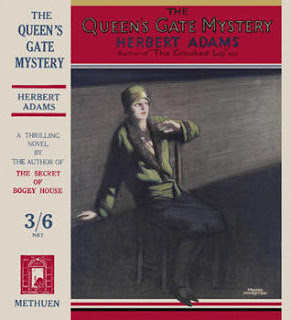
IN BRIEF: The Queen's Gate Mystery - Herbert Adams

Jimmie Haswell receives a note from his friend Capt. Gregory Bruden inquiring about the legality of finding something of value in a home in which the owner died.  Is it a case of finders keepers?  Or does the cache of treasure still belong to the estate, the heirs of the dead former owner of the house. What if the finder then buys the house?  Is it legally his property because it was found in the house?  Jimmie is mulling over these various legal riddles when he learns of a murder in a house that was for sale.  And the corpse turns out to to be Capt. Bruden.  Could Bruden have been killed because of the letter?  Was there some hidden cache of something valuable in that supposedly empty house now for sale where Burden  was found bludgeoned?  Well, of course the two are tied together!  That's the core of The Queen's Gate Mystery, a quasi detective novel of murder, hidden treasure and a gang of ruthless criminals.

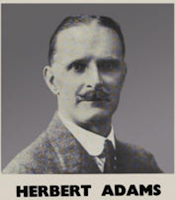
The Queen's Gate Mystery (1927) is Jimmie Haswell’s third outing as an amateur detective.  He  is a lawyer --a solicitor, not a barrister -- recently married to Nonna, a French woman he met and fell in love with in his previous adventure The Crooked Lip.  Nonna convinces Jimmie to investigate the various legal questions posed in Bruden's letter and to prod the police into tying the letter to the murder.  The two of them get in over their heads and soon what began as a detective novel transforms into a full blown action thriller rife with the kind of 1920s set pieces that would make this novel suitable for the afternoon serials of Adams' contemporary cinema. 

Nonna is abducted, Jimmie must rescue her.  Jimmie is attacked, bound and gagged and must escape. The search for the treasure intersects with a subplot of a ring of criminals some of whom are looking for the treasure, others who have their own reasons for using the house.  Secret passageways which featured prominently in Haswell's debut (The Secret of Bogey House, 1924) are key to solving the mystery of how the crimes are committed but this is no surprise at all and rather obvious early in the book.

Jimmie says late in the book, "What an ideal place golf links must be for conspirators to meet and plan their crimes."  Golf courses recur as settings for murders and the game crops up in a variety of ways throughout Adams' novels. Here it isn't so much the game itself as it as an aspect of golf.  One of the clues Haswell stumbles across while searching the rooms of the murder site -- actually it's Nonna who finds it -- is a golf scorecard that includes a hole-in-one. The scorecard is prominently stamped with the name of the golf course and club. Knowing that this high achievement in golf is almost always celebrated at the course and talked about in the clubhouse Haswell heads to the course and with clever questioning discovers the person who made the shot. He then sets out to prove that person was present in the house around the time of the murder.  Eventually, that ace golfer is implicated in several other crimes as well as the murder.

As always romance plays an important role in the story. Haswell often riffs on the life of a newlywed with some amusing remarks. His devotion and love for his wife spur him on giving him a sort of superhuman talent in rescue and survival. Nonna is interested in getting the other couple to repair their relationship after a damaging quarrel seems to turn them against one another. Never fear. They all make up and both Jimmie and Nonna and Philip and Enid foil the villains and live happily ever after.

The action sequences leave a lot to be desired, however. While I found it hard to believe that he could actually untie knots by simply manipulating the tight cords on his wrist on a hook embedded in a brick wall and do this all with his back against the wall in pitch darkness it still made me smile.  Oh the days of derring-do in 1920s action adventures.  The story is pure cliffhanger movie fodder.  But Jimmie and Nonna are just plain likeable so it's hard to make fun of such familiar stock in trade action and hackneyed devices, as Carolyn Wells liked to call them.

I have a few other Haswell books to get to and then I'll be sampling several of Herbert Adams' non-series detective novels.  But nothing has yet to outshine his remarkable achievement in the baffling and exciting detective novel The Crime in the Dutch Garden.

Jimmie Haswell Crime Novels
(reviews on this blog have hyperlinks)


The Secret of Bogey House (1924)
The Crooked Lip (1926)
The Queen's Gate Mystery (1927)
The Empty Bed (1928)
Rogues Fall Out (1928)
The Golden Ape (1930)
The Crime in the Dutch Garden (1931)
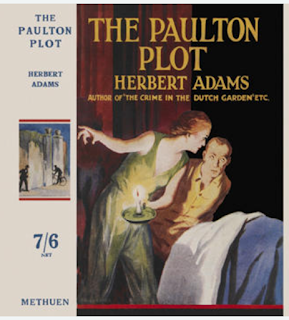
The Paulton Plot (1932)
The Woman in Black (1933)

Wednesday, February 10, 2021

NEW STUFF: The Cabinets of Barnaby Mayne – Elsa Hart

Collector mania. Why have I read yet another book about an aspect of my own life? Am I really that self-obsessed? Must I read about collecting in order to understand my own obsession with obscure genre fiction and my almost pathological acquisition of hundreds of these books? Do I really need to read one more novelist’s ideas about the psychology of monomania? Yes to all questions! And after all this book is set in the 18th century. (OK, that was just a feeble excuse to look the other way when faced with answering those questions I posed) But guess what? This was quite a page turner. And the best part? The Cabinets of Barnaby Mayne (2020) is a legitimate detective novel.

Until I stumbled across Elsa Hart’s fourth novel in the library I knew nothing of her or her books. According to the jacket blurb and her bio she has written three other mystery novels featuring Li Du, a librarian of 18th century China living in exile near the Tibetan border who accidentally becomes a detective. The subject matter of each of those books seemed a bit eggheady to me and would not have appealed to me. But The Cabinets of Barnaby Mayne despite its possibly dreary 18th century setting and a self-consciously decorous writing style won me over almost immediately. Hart knows how to tell an engaging story, creates lively and flawed characters, is masterful with her plotting and actually employs fair play detective novel conventions. I devoured this book the way a mad collector goes after a rare specimen to complete a set of wondrous objects.

Cecily Kay travels from her ex-patriated home in Smyrna where her husband is a diplomat to London in order to study the collection of plants in the awe-inspiring and vast collection of oddities in the museum like home of Barnaby Mayne. While conducting a tour of his home for Cecily and other like-minded collectors there to marvel at the shells, plants, insects, taxidermized animals and esoteric artwork Mayne is distracted by an urgent message. He excuses himself allowing his guests to wander his home on their own. Shortly afterward he is found brutally murdered in his private study. His assistant is found in the room holding a knife in his hand and screams out “I killed him!” and then flees.

Is it all over before it has even begun? Oh no, my friends. Cecily has noticed things that just don’t add up. She disbelieves the confession from the meek assistant and is convinced he is protecting someone. She and her friend Meacan, a talented illustrator hired to do some drawings of Mayne’s collection, turn amateur detectives to ferret out the truth. When Lady Mayne arrives to take care of her dead husband’s estate she is encouraged to have the collection catalogued. Meacan and Cecily are quickly appointed to undertake the daunting project. Their presence is the house then allows them opportunity to investigate the murder site. They can also pore over the rooms without being questioned as they simultaneously carry out the cataloguing task and hunt for evidence the police might have overlooked since they have in custody the confessor and think the case is closed.

The suspects are numerous but mostly confined to the men and one woman who were present in the house during the tour. Over the course of their sleuthing and probing Cecily and Meacan uncover an investment project that is financing the search for sunken treasure at a shipwreck, a cabal of occultists who may have been involved in secret rituals, and meet with a sinister coffee house owner who is part con man and part vigilante. Hart gives us an abundance of thriller conventions like abduction and eleventh hour rescues in addition to the requisite, sometimes slyly underhanded, questioning as part of the murder investigation.

And while there are some well-placed clues that I missed the book suffers from one of the cardinal sins of this type of adventure thriller – a not so well hidden villain.  I immediately suspected one character the moment he first appeared and was proven correct. I didn’t have to examine his motives or behavior, My targeting him was based solely on the fact that he exemplifies a certain archetype found in Gothic and neo-Gothic novels from which The Cabinet of Barnaby Mayne has most definitely evolved whether Hart is conscious of it or not. When I see that type of character in a novel of this sort I always expect the worst outcome, underhanded manipulations of even seemingly good actions.

On the final page Cecily mentions she has received a letter about the current tenants fleeing her home that she and her husband leased while they were in Smyrna. The letter writer implies something rather mysterious was going on. She offers Meacan a chance to travel with her and investigate the reason why the family left. This most likely indicates a sequel in the works. Perhaps the second book of another trilogy? I’ll be sure to check out the next adventure of Cecily Kay and Meacan. Even with its obvious villain this was one entertaining contemporary mystery novel -- well written with a couple of excellent lead characters and a cast of eccentric people who hide unexpected secrets and so detailed and steeped in its milieu that I felt I was reading a book written centuries ago rather than only last year. Elsa Hart is worth watching. I may even try one of the Li Du mystery novels now.