Showing posts with label Kosuke Kindaichi. Show all posts

Friday, January 3, 2020

FFB: Shimada & Yokomizo: A Showdown of Narrative Styles

Two books that were eligible for Best Vintage Mystery Reprint of the Year were the first English translations of decades old Japanese mystery novel. I read both in December and while I perhaps would’ve nominated one of them (but not both) someone else beat me to the one worthy of the award. Each is an example of fantastical plotting techniques that make Japanese detective fiction both admirable and infuriating to a diehard fan.

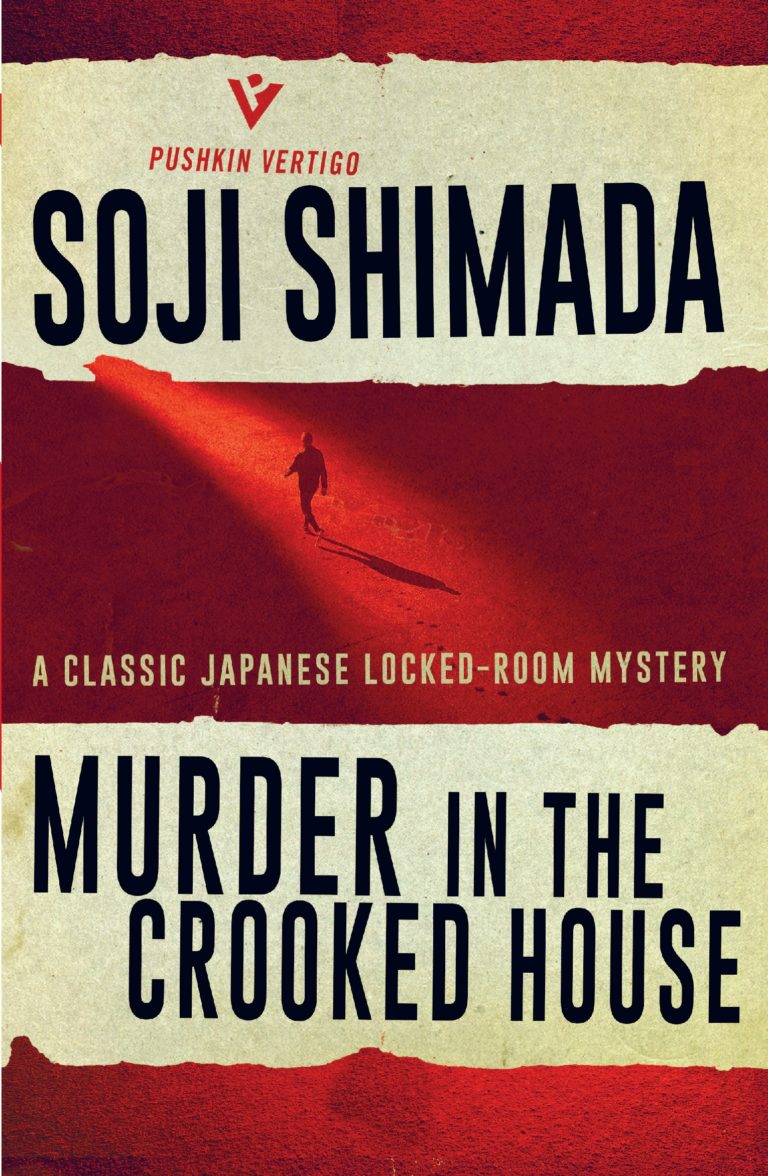
First let me tackle Murder in the Crooked House (1982) by Soji Shimada. Shimada wrote the brazenly audacious The Tokyo Zodiac Murders which I read decades ago long before it was reprinted. It’s a perfect example of the new vein or “orthodox” Japanese murder mysteries that incorporate puzzles into detective novels. And in this case the word incorporate is literal.

But these puzzles are not baffling aspects of the case they are the entire reason the book and story exists. To the Japanese mystery writer and those who devour this very specific type of detective novel a puzzle is a puzzle is a puzzle. Nothing else really matters. The solution to The Tokyo Zodiac Murders is in fact something I came across as a teenager in a puzzle book which has nothing to do with killing or murder. It is a simple tangram puzzle. What Shimada does is both ingenious and utterly perverse in how he adapts the puzzle as part of his solution to his murder mystery.

Similarly, Murder in the Crooked House is nothing but a puzzle. While not inspired by a tangram the plot does incorporate a ridiculous idea – that someone would construct an entire house in order to obtain murderous revenge. The reader must not only suspend disbelief and enter a wholly fantastic universe, but must accept that someone would find it necessary to spend thousands of dollars (or yen, I guess) and well as investing several years of their life in carrying out this vigilante style retribution for a decades old past wrong.

Admittedly, the revenge plot that is years in the making is a timeworn detective novel motif. This is not what I take exception to. In mystery novels like The Tragedy of X and Thirteen Women, where a revenge plot may have been the product of monomania and taken years to plan and reach fruition the murder methods are fairly simple. It is the motive that is unknown to the reader and detectives. This is the puzzle that must be worked out.

And granted there is an entire subgenre of detective novels where the murder method is baffling to the police and this creates much of the gameplay, so to speak, as the reader tries to match wits with the detective in the story. Both are trying to figure out not so much the whodunnit aspect of the crime but the howdunnit.

In both examples the puzzle is an aspect of the crime or crimes. It does not encompass the entirety of the story, it is not the raison d’être. Murder in the Crooked House is not really a detective novel at all. It is a series of puzzles with one overarching puzzle that serves as the pièce de résistance. This is not what detective fiction is about; it is an unfortunate consequence of stressing, practically worshipping, form over substance. In the case of Murder in the Crooked House form, in all its contexts, is everything -- the architecture of the fictional house becomes the architecture of the plot. Once the reader is presented with the preposterous reasoning of the murderer and the full outline of the various murder methods, however, the house's true purpose is revealed and as a direct result, ironically, the story simply collapses. There is no satisfaction in having arrived at the end and discovering that the characters were puppets, the motive was cliché, and the house itself was one gigantic murder method dying to carry out its landlord’s diabolical wishes.

As some wise guy might say in an American pulp novel when presented with one of these absurd impossible crimes: “Pulling a trigger would’ve been faster and helluva lot easier.”

On the other hand a Japanese detective novel can present us with a puzzling murder, done in a bizarre manner and still be entertaining to read, fun to match wits with the detective, and leave the reader with a the satisfying feeling of having read a true novel populated with complex people with human emotions and understandably sound motives. The crimes may be bizarre but there is an inherent logic about why they appear bizarre or why the method had to be baroquely constructed. This is the success of The Honjin Murders (1948), a thoroughly Japanese mystery steeped in the culture and mores of pre-WW2 era Japan with characters who behave according to both their own personal code of honor as well as Japanese custom.

The added bonus is that the book is a homage to the entire detective novel genre with one character an avowed mystery novel collector and reader of the “classics”. Our mystery writer narrator (the voice of Yokomizo himself I am assuming) also reminds us of his own knowledge of Western novels like The Red House Mystery and The Murder of Roger Ackroyd.

This is a genuine detective novel with interesting characters, while some like the matriarch Iwoko are eventually consigned to the background and the elder daughter is entirely absent from the plot, there is never any doubt that we care about the fate of the Ichiyangi family. Kosuke Kindaichi makes his debut in The Honjin Murders shining in genius-like form as he figures out just how the newlyweds were killed in the locked room on their wedding night and who did the deed. Along the way are the added multiple mysteries of what was found in a cat’s grave, a gruesome discovery in a charcoal kiln, koto strings being plucked by invisible hands, and a katana sword found embedded in the snow-covered ground with no footprints surrounding the site.

Coincidentally, we are treated to another story in which architecture is featured in the plot. The history of the honjin, the specific architecture of an annexe house (see plan at left), the importance of sliding shutters and tatami mats and folding screens are all spelled out in fascinating detail. In truth none of this is necessary to understand how the story unfolds, why the murders took place or why the method was so complex. What is important here is the search for truth not merely the solution of puzzles. What Yokomizo does so skillfully and artfully is tell us a story of a family plagued with secrets and slowly reveals this to us.

As a debut novel The Honjin Murders is not without flaws. There is an odd Victorian Gentle Reader touch in the narrative. Some of the plot revelations are misplaced and lessen the suspense and overall effectiveness as a novel. But there is much at stake in this story and there is poignancy as well as surprise in the finale.

It should be noted that Yokomizo tells his complex and affecting story in under 200 pages while Shimada’s turgid book comes to 350 pages full of puzzles but not much mystery. Narrative economy is more attractive and often more artful.

Both books are available from Pushkin Vertigo (here and here) and both are translated by the gifted Louise Heal Kawai who does an admirable job of blending contemporary styled dialogue into the Japanese flavor of the narrative sections. In the case of The Honjin Murders much of the narration often reads like miniature history lessons and Kawai makes it both intriguing and easy to understand. In my case she had me eager to learn more…and I did.

Saturday, November 12, 2011

The Inugami Clan - Seishi Yokomizo

My knowledge of Japanese detective novel is limited, but if I am to believe what is written on the jacket blurbs of every Japanese mystery novel translated into English, then every Japanese mystery writer is a bestselling and extremely popular author in their homeland, a claim that seems farfetched. I have read the strange stories of Edogawa Rampo ("considered the dean of modern Japanese mystery writers") and a handful of novels by Shizuko Natsuki (dubbed "the Agatha Christie of Japan" on one of my books) who are supposed to be bestsellers. I have also read The Tattoo Murder Case ("among the most read of Japanese detective mysteries") and The Tokyo Zodiac Murders ("still one of the best selling mystery novels in Japan") by two more popular authors and two excellent spins on the locked room/impossible crime subgenre. One week ago through sheer luck I found a copy of The Inugami Clan, a book that is not only written by a best selling author, but is touted as a classic in Japanese detective fiction and the most popular title of the author’s 80 plus books. For once I agree with all the hyperbole on the jacket blurb. This is one Japanese detective novel that all devotees of the Golden Age ought to seek out. I would dare to call it iconic in the mystery and crime fiction of Japan.

Seishi Yokomizo in his final years
The author, Seishi Yokomizo, began writing detective fiction in the late 1940s. The Inugami Clan is his tenth book and was originally published serially between 1950-1951. The story itself is set in 1949 with post-World War 2 Japan fueling a major aspect of the plot. His detective Kosuke Kindaichi is practically an icon in Japanese popular culture having appeared in the movies, TV and graphic novels. The Inugami Clan was filmed twice (1976 and 2006), both times by renowned director Kon Ichikawa.  So popular was Yokomizo's detective that a spin-off character was created who is purportedly the grandson of Kindaichi. I went to YouTube and watched countless video clips from a long running TV series about Kindaichi -- none of it dubbed, all of it completely incomprehensible to me, yet fascinating all the same since I was by then familiar with the character of Kindaichi. I even watched a trailer for a video game version of The Inugami Clan which visually I did understand even if I couldn’t read any of the Japanese phrases being flashed across the screen. The illustrations and characters depicted in that video game trailer accurately and vividly depict what I read in this fascinating and grotesque mystery novel.

Based on the other books I have read (most published in the 1970s) it appears that Seishi Yokomizo truly is the forefather of the modern Japanese detective novel. On display are all of the characteristics that you will find in any Japanese crime novel from the 1940s and onward: an intricate plot that is fairly clued, grotesque murders, family secrets, disguised individuals, false identities, an eccentric detective with wily methods, and efficient policemen clever in their own right but easily baffled by the fantastic elements that accompany the crimes. The Inugami Clan is rife with the bizarre and the grotesque, has a smattering of Japanese lore and culture, and shows more than a few nods to the detective novel tropes so well known to Western readers. The opening scenes, for example, are reminiscent of Peril at End House with a young woman who tells Kindaichi that she barely escaped three outrageous attempts on her life. Yet in its essence the novel is utterly Japanese. The motives of one of the characters make perfect sense in Japanese culture though would strain credulity in a mystery written by a European or North American.

Matsuko Inugami takes a handprint of her son Kiyo in the 2006 film remake
The basic plot is familiar to any devotee of golden Age detective fiction. A family of greedy relatives awaits the reading of the will of recently deceased Sahei Inugami, wealthy owner of a silk factory. The will turns out to have convoluted rules requiring Tamayo, a non-blood relative, to choose her husband from Sahei's three grandsons. She must do so within a required time period or risk losing her inheritance. If she chooses none of them, she forfeits the entire fortune and it reverts to the mysteriously missing Shizuma, a young man rumored to be Sahei's illegitimate son. Needless to say the will infuriates all the relatives, mostly Sahei's daughters - the mothers of the men Tamayo must consider for her husband. Soon the grandsons are being stalked by a fiendish killer who seems to be re-enacting a curse set down decades in the past.

Discovery of the decapitated head of Take Inugami in the chrysanthemum garden (2006 film version)

The story reminded me of an old Gothic sensation novel with creepy settings, frenzied characters, mutilation of dead bodies, and bizarre murder methods employed. The bodies are discovered in unusual places like the eerie garden with life sized dolls all wearing kimonos made of chrysanthemums, or submerged upside down in a frozen lake. One of the most unusual characters is Kiyo who has returned to his home horribly burnt and disfigured from the recent war and wears a life-like rubber mask that resembles the features of his face prior to his hapless service in the war. And of course there is Kindaichi himself - described as a sort of Japanese Columbo elsewhere on the internet. He is an odd man who always dresses in a traditional, albeit shabby and rumpled, Japanese kimono and wears a beaten woolen hat, and for the most part he is of unkempt appearance. He scratches his tousled hair in a fidgety manner when mulling over strange clues, and is given to excitable stammering when on the verge of solving one of the many puzzles attached to the numerous crimes.

French version of The Inugami Clan.
(The ax, the koto & the chrysanthemum are
three family heirlooms that are part of the curse)
I thoroughly enjoyed this book and if I managed to figure out many (but not all) of the puzzles in the story it is not a strike against Yokomizo as a mystery writer. He has a Christianna Brand-like plot device with several characters attempting to protect loved ones whom they suspect of being the murderer and manipulating the evidence. Consequently, the crime scenes as discovered by the police and Kindaichi may not always be a reflection of the truth. This was one of the best parts of the book to me. Yokomizo's fertile imagination and plotting make for an entertaining and satisfying read. What is most frustrating, however, are the numerous allusions to previous books in the series which tantalize an English reader like me who would love to read those other stories. Who wouldn't want to find out why the murderer in The Honjin Murders (Kindaichi's first case published in Japan in 1946) displayed the victim hung upside down from a plum tree? Or discover the horrific secret of a body found stuffed inside a temple bell in Gokumon Island (1948)?  These are only two of the six other books mentioned throughout the telling of the strange murders in The Inugami Clan. But - you guessed it - this is the only Yokomizo book to have been translated into English. I'd have better luck if I could read French - there are at least three books translated into that language that I found, perhaps more. I guess I can only hope and wait for some enterprising translator to give us more of Kosuke Kindaichi's adventures in English.

Here is the trailer for the 2006 remake from director Kon Ichikawa. One of the rare versions I found with English subtitles. Enjoy, then go find a copy of the book and read it!